
When we started developing our conveyor belt product line, we had two goals in mind: to diversify VM Rubber’s product range and invest in an industry we already knew well.
Year after year, our catalogue expanded. We built new partnerships and exhibited at Bauma Munich, where we received confirmation that we were heading in the right direction.
Then we realized something important: tools alone are not enough.
Choosing the right one requires understanding the belt’s construction, evaluating the type of repair, knowing why one method is more suitable than another, and recognizing the mistakes that can compromise the entire job.
That is how the idea of adding a new service alongside our products was born: Cold Splicing Training for conveyor belts.
We began developing the project between November and December 2025.
An idea waiting for the right moment
We had already been talking about it after Bauma 2022. At the time, however, we were still building our team and expanding our conveyor belt product line.
It simply wasn’t the right time.
We waited until we had the necessary expertise and the right organization in place. Only then did the idea become a real project.
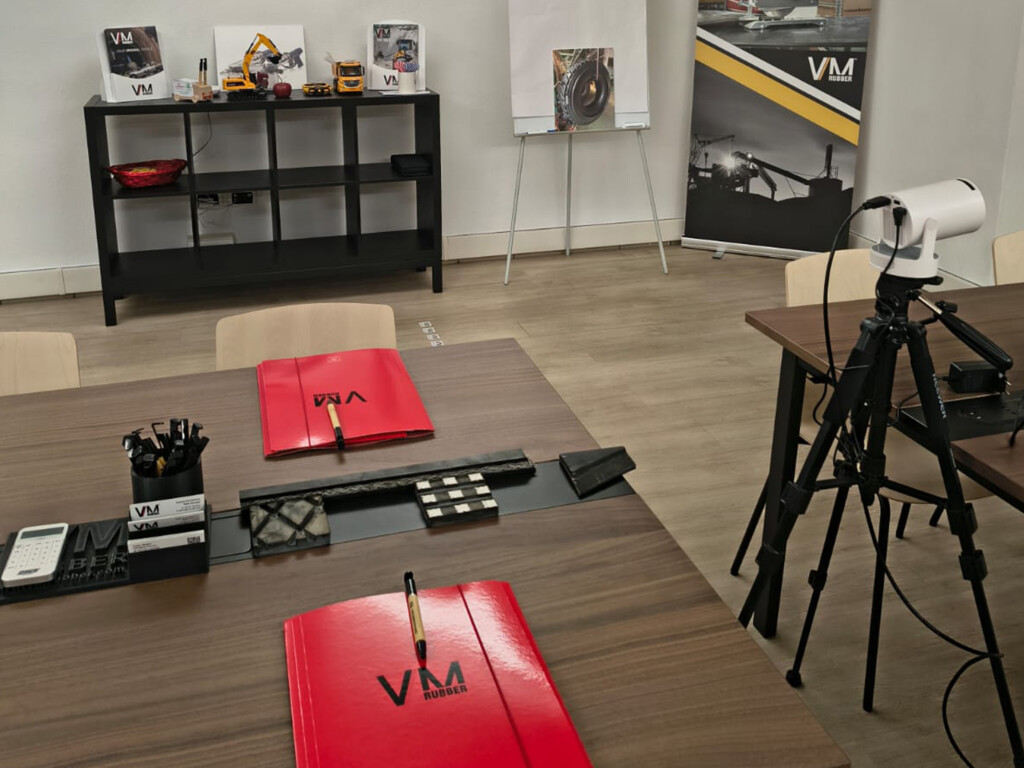
Preparing the training involved several steps. We first set up a dedicated training area at our headquarters, the Rubber Room. We then developed the training material, defined the course structure and reached out to customers to gauge their interest in the first training sessions.
We decided to begin with a limited number of companies. It was the best way to test the training format, observe how the sessions unfolded and collect feedback before rolling it out more widely.
What kind of training did we want to build?
The first training sessions were designed specifically for our customers.
The goal was to help them understand how a cold splice is performed and the role each tool plays throughout the repair process.
We didn’t want to simply present a range of tools. We wanted to place them in context: the repair method, surface preparation and the correct sequence of operations.
In the future, we would like to extend the training to smaller repair companies that want to deepen their knowledge of cold splicing techniques and discover how to get the most out of our tools.
From belt construction to the workbench
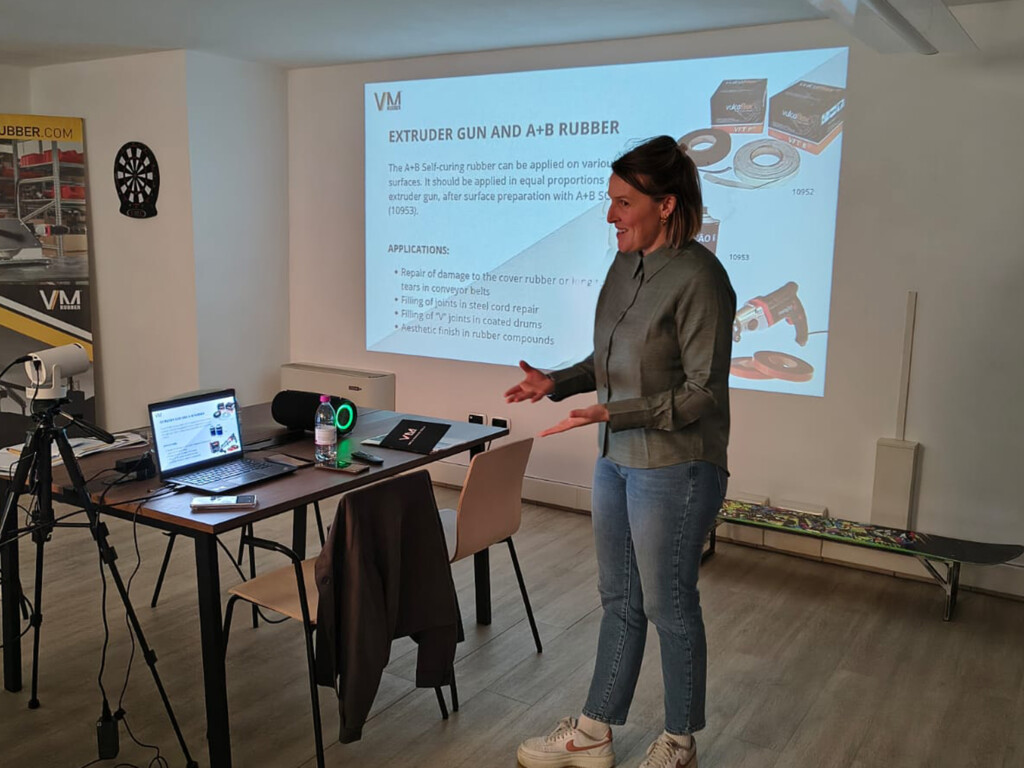
The theoretical session follows a clear path.
It starts with conveyor belt construction and the materials that make up the belt. Participants then learn the principles of chemical bonding for EPDM belts, followed by the main repair methods: cold splicing, mechanical splicing and resin repairs. The session also explains the key differences between these techniques and hot vulcanization.
This knowledge helps participants understand why apparently similar operations require different tools and why proper surface preparation should never be overlooked.
In the afternoon, theory gives way to practice.
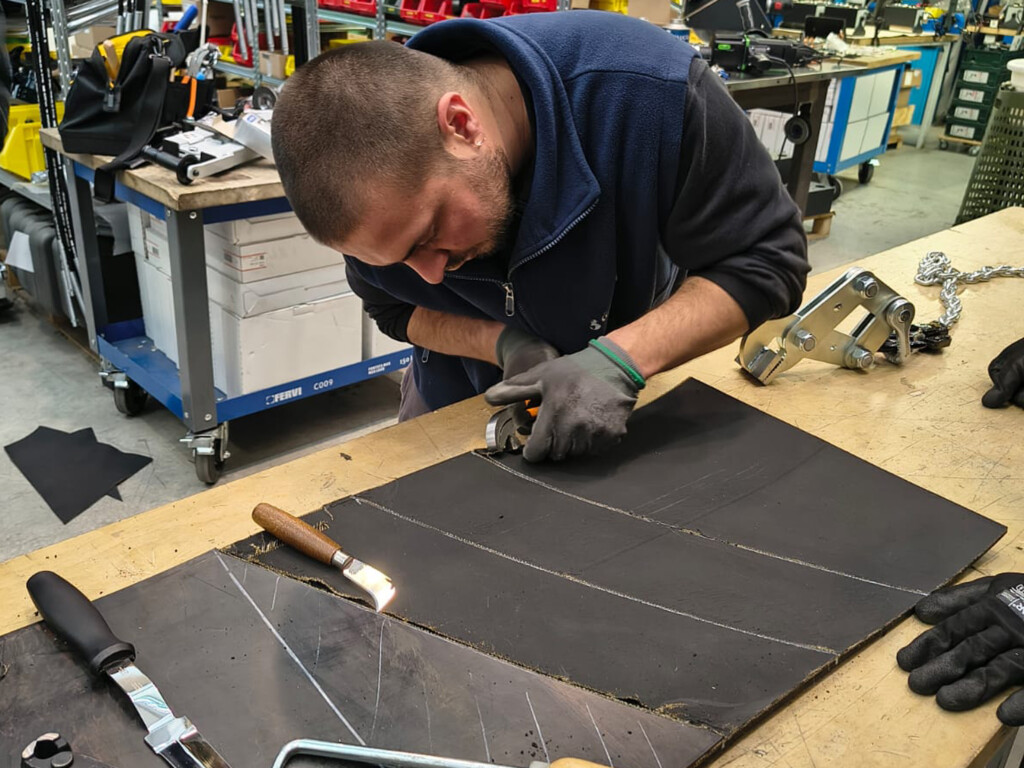
Participants perform a stepped splice, completing every stage of the process: belt surface preparation, ply cutting, beveling, bonding and pressure rolling.
Each step allows participants to see the tools in action and understand exactly what they are designed to do
And, as often happens, the best questions usually come once the cutting and bonding begin.
This was one of the aspects we focused on the most while preparing the training.
We didn’t want participants to simply browse through a catalogue. We wanted to explain why each tool has a specific design, when it should be used and which problem it is meant to solve.
From the ply knife to the ply lifter, each tool is introduced during the practical session.
That is the real purpose of the training: showing the connection between the repair method, each operation and the tool designed to perform it.
Because a tool without its context is just a tool. At the workbench, however, its purpose becomes clear.
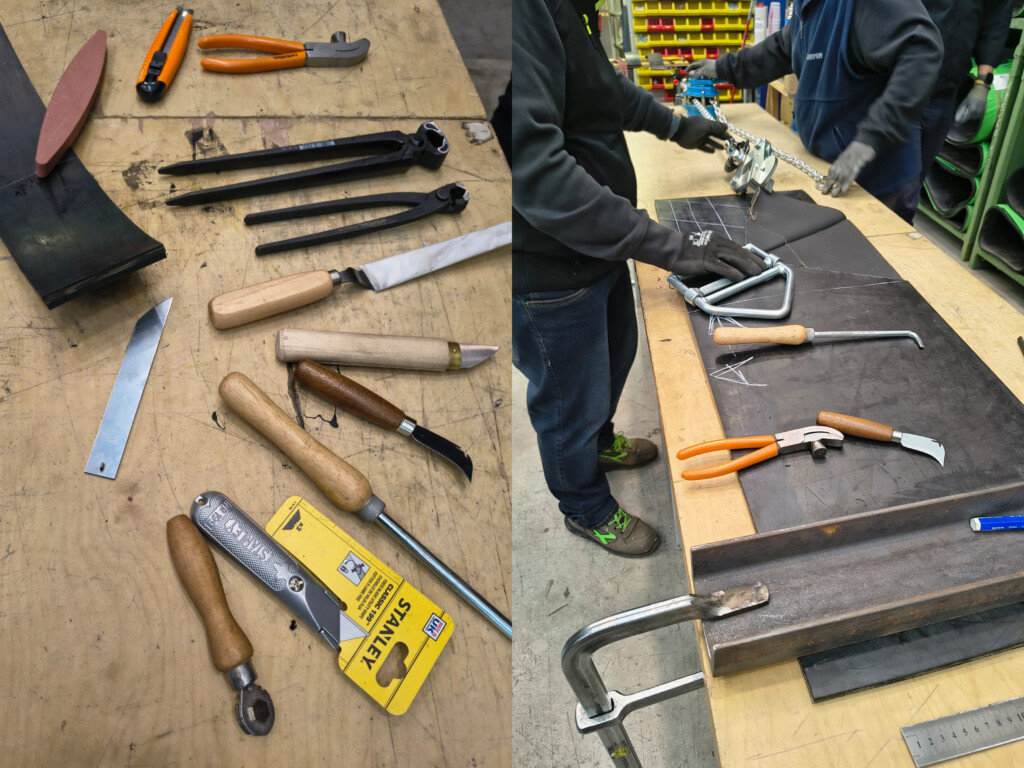
The two training sessions held in March and April marked the beginning of the project.
The discussions with participants allowed us to collect valuable feedback, identify areas for improvement and understand how future editions should evolve.
We’ll continue developing the training, adding new dates and expanding the content.
For us, this training is not something separate from the tools we develop. It is the next step: showing how every product fits into a complete conveyor belt repair.
From the tool to the method. And finally, from the catalogue to the workbench.